In our column, Meet a local, we present interesting individuals from different professional fields living in Serbia. The idea is to get to know some locals and their favorite neighborhoods and venues in their city.
Please introduce yourself:
This question is not hard per se, but constraining, hungry for definitions, frames, and stability — I do not fit well into an answer.
Call me a flâneuse, la fiancée du pirate, an intellectual, a rebel, even a poet: A body-subject in the third space. A translator. A nomadic subject. A nomad with a dynamic identity. (…) Response-able. (…) Unalienated from the landscape. Non-aligned.
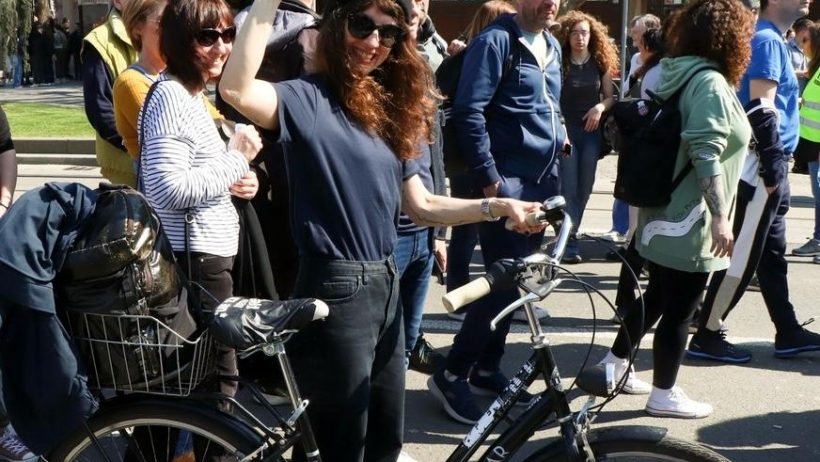
All right, in short: a cultural manager, theatre scholar, and ecofeminist. From the mountains. After many years in Berlin, here and there, based again in another B. Registered as Ivana Ječmenica.
Has there been a new project lately?
Surely. One of them is a co-adventure in friendship, envisioned to take the form of an event grounded in my poetry book I Don’t Speak Utopian (Siesta, Berlin, 2025) as an invitation to reflect on the politics of utopia in the Blochian sense — not as a “no-where,”
but as the “not-yet” and the “now-here.” The gathering will explore self- and collective care, resilience, and resistance, loosely echoing Plato’s Symposium with good wine and food, bold minds, hearts, and bodies. Eros is on the guest list.
In parallel, I am developing with a Russian artist a dialogue-performance that critically questions and articulates my own and her biography at the intersections of personal narratives and broader socio-political realities.
What do you like about Belgrade?
It is a soulful city, never Western enough, always too far from the East. Its pulse is palpable. Sunny days are many. There are stray cats, and people feed them. Here, we still help an unknown fellow human on the street. We humbly apologise with a smile when we disrupt one another in the social choreography. We cross the street on red lights, since we rely on our own agency and take the risk. It keeps us human, trust me, somewhat disobedient, even anarchic, sustaining a culture of protest. Belgrade
knows how to raise a fist.
Where do you like to go out?
Certainly to Drugstore and Dim, especially on Sundays when it turns into Para. These places are in a way points of contact with my Berlin-shaped lifestyle, a stage for the clubber part of my identity, a dark and loud therapeutic space where I fully return to my body, feel it, and become amazed by its water-like power, shifting from a river to an ocean. Apart from that, I have attended some exceptional concerts surrounded by quality people at Kvaka 22, Radostan, Karmakoma, Chillton, Guvernanta, etc.
Name 3 of your favorite restaurants in the city
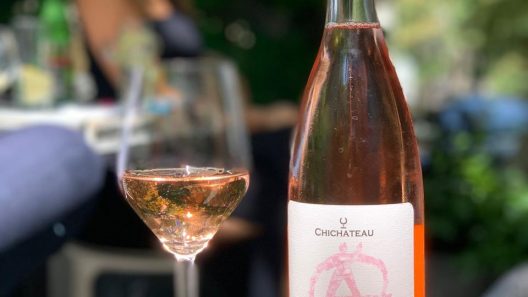
I wish you had asked me to name my favorite wine bars, so I will answer playfully. After years away from the Balkans, and acknowledging its hedonistic intensity, I will begin with the very concept of New Balkan Cuisine, choosing Dragoljub for its calmer
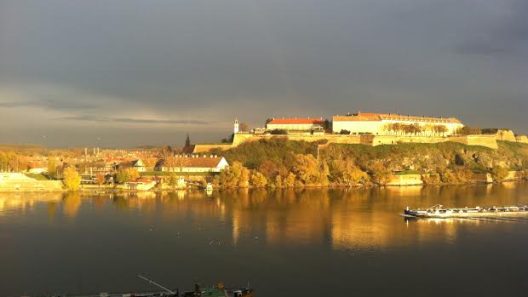
atmosphere and proximity to my apartment and to one of my dear theatres, where I spent some formative time working backstage. This restaurant features a carefully curated wine list. I am a pescatarian and a farmer’s market aficionado, so instead of going down to the Sava or the Danube, I go up to Đeram — Tezga 54 (approved wine list, even Baša included). At Kunst Wine Bar, I do eat, but rather drink, socialize, and occasionally write research proposals and alike. Similar applies to Process, Recept, and Oliver—what a place!
Where do you drink coffee?
My first coffee is always at home. Apart from wine, this is the area in which I am an experienced and knowledgeable high-demander. I select specific coffee varieties, paying attention to fermentation, processing, and grinding. I use a Brikka, Oatly, and perform my
personal barista.
The second one is usually at Pržionica where I have never been disappointed. The atmosphere is lively even in the darkest winter, not least because of the music. It is one of the few places where I take off my isolating headset, joyously letting it interrupt the
flow of my writing and lead into conversation with the barista+dj.
Another place is “3” on Svetogorska Street, not so much for the coffee itself, but for the beauty of almost forest-like working hours in the back part of the restaurant. On the same street, Kondina, there are two more places I frequent: Artist and
Evergreen. Their staff is super friendly, and the latter feels particularly homey.
Where do you spend your leisure time?
The theatre landscape is for me a more essential question than one of leisure. Apart from Bitef Theatre, which I hold dear and relevant for many reasons, I am always curious about the non-theatrical spaces and what the wider independent scene is doing,
as well as the kinds of systemic and structural challenges it faces.
From time to time, I attend and also co-organize events at Community Center Krov, which is an important self-sustaining, interdisciplinary, open commons, ranging from pure leisure (bleja), via meaningful encounters, to theoretical discussions.
There is also CC Loža, run by a lovely Russian community. Since moving back, I have remained intrigued by the Serbo-Russian dynamics in the city, which do not seem to intersect significantly. I would like to contribute to changing this, as there is a clear
potential for exchange and mutual growth. Cultural Space Radionica is also part of this constellation. Physical activity has been a constant in my life, so I go to a gym in Vračar four times a
week (Les Mills BodyPump addict). Nevertheless, this place is also a good cultural and socio-political case study: a predominantly patriarchal and right-leaning environment, marked by overly sexualized body aesthetics set against a soundtrack rooted in
domestic 1990s pop (domaćica).
Name your 3 favourite locations in BG and justify your choice
My #1 location is unquestionably Kalenić Farmers’ Market. I am there regularly on Saturdays. It is not only about the quality of the food, but also about the people, especially in the flea market section. There is a specific non-institutionalized, gentle, and organic kind of wisdom. We see, hear, and listen to one another, which makes it easy for me to initiate storytelling circles. It often evolves into something I call TERRAPIJAca (Earth + Therapy + Market). We already know each other, so we simply continue where we left off the previous weekend. And yes, I often leave with some gifted fruit and vegetables. A natural paradise (tomato ) on concrete!
During my master’s studies, I used to cycle from Lower Dorćol, taking Kralja Petra Street uphill to Kosančićev Venac (the Rectorate of the University of Arts in Belgrade). That route between the Danube and the Sava is a multicultural microcosm: the only
mosque in Belgrade, my favorite pie shop (Pitara), the Jewish Community Center, a few remaining old craft shops, secessionist architecture, a primary school designed by the first female architect in Serbia, the Tavern “?”, the Serbian Orthodox Cathedral, the
Residence of Princess Ljubica in Ottoman style, the Faculty of Applied Arts, a cobblestone street corner where some iconic films were shot, a poet’s house with its distinctive balcony, the ruins of the National Library bombed in 1941, and a view across the river toward the Museum of Contemporary Art and my favorite “boat club,” 20/44, now gone (moved to Savamala).
The last place I will mention is the rooftop of a friend’s building on Krunska Street. The sunsets there are incredibly peaceful, and Belgrade could be in Italy, Spain, Argentina, or France, but the Temple of St. Sava, the brutalist Eastern City Gate, and a graffiti
reading PUMPAJ! Reminds you well of the geography.
Writer. Blogger. Traveler. Researcher. Electronic Music Lover.