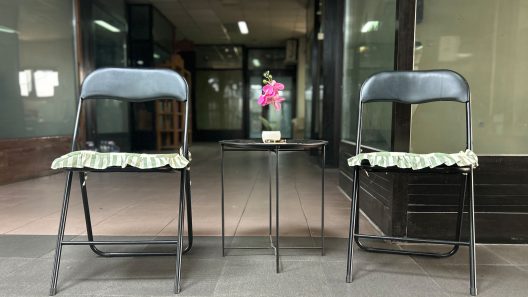

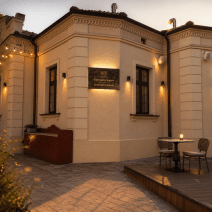
In a city already known for its energetic nightlife, hidden bars, and increasingly sophisticated gastronomic scene, it takes something truly distinctive to stand out. Yet that is exactly what Demokratija achieves — an intimate bar in Zetska Street that combines signature cocktails, carefully curated Serbian wines, and the atmosphere of genuine conversation.
Behind the concept are Gleb Kuchmenko and Dmitry Laskov, two enthusiasts of bar culture who found inspiration in Belgrade to create the kind of place they themselves felt was missing: smoke-free, unpretentious, and deeply focused on taste, terroir, and the guest experience.
While many bars build their identity around spectacle, Demokratija relies on something much simpler — communication. Here, wine is discussed through stories, regions, and emotions. Prokupac smells like an old cellar after rain, Tamjanika evokes the scent of an Orthodox church during Easter, and Serbian Pinot Noir from Fruška Gora can easily confuse even experienced Burgundy lovers.
In an interview for Still in Belgrade, Gleb and Dmitry discuss why they chose Zetska Street, how they discovered Serbia’s wine scene, why they believe Serbia is actually home to four completely different wine countries, and why local wines today can confidently stand beside French and Italian labels. They also speak about cocktails made with Sombor cheese, homemade liqueurs, natural wines, and what it is like to build a new bar concept in Belgrade.
If you want to discover where to taste some of Serbia’s most exciting wines right now, how foreigners react when they try Tamjanika for the first time, or why one wine can remind you of smoked sausage, continue reading our interview with the team behind Demokratija.
1. You chose Zetska Street as the home of Demokratija. Why this historic street specifically?
Gleb:
The main factor was the flow of people, since Zetska is right in the center of the old town, surrounded by many well-known venues, especially in Skadarlija and the Cetinjska bar district.
At the same time, this street has something unique of its own — despite the energy of the neighborhood, it still feels calm and never overly loud or chaotic. You are in the middle of everything, yet you can peacefully enjoy a cocktail.
2. As newcomers to Belgrade, what first attracted you to the local gastronomy and wine scene?
Gleb:
Three years ago, Arseniy (the creator of the bar concept) and I were living in Turkey when we decided to move to Belgrade, because this city truly deserves recognition as one of Europe’s best bar capitals.
While exploring the local scene, we realized what kind of place we personally felt was missing: an intimate smoke-free bar with carefully designed signature cocktails, preferably using local ingredients, and an atmosphere you genuinely want to return to.
Special thanks to Serbian people — without your hospitality, this place simply would not exist.
Dmitry:
What immediately attracted us to Serbian wine was its regional diversity. Serbia is not one single wine zone, but rather a mosaic of regions with completely different styles. The second thing was the indigenous grape varieties.
We didn’t arrive with either high or low expectations — we simply started tasting what locals produce and drink. The first real discovery was Prokupac, the indigenous variety we truly fell in love with later on: cherry, tobacco, earthiness, a full body, yet incredibly drinkable.
3. What surprised you the most when you first started exploring local wines?
Dmitry:
What surprised us most was the sheer scale of regional diversity. The deeper we explored, the clearer it became that Serbian wine remains underexplored even among Serbians themselves, not to mention tourists. And that is precisely what makes the local wine scene so unique.
The second big discovery was that Serbian winemakers are not afraid to work with international grape varieties — and they do it exceptionally well. Merlot or Cabernet Franc grown here retain their recognizable style, but also develop a distinctive spicy character we had never encountered elsewhere.
4. You often speak about regional diversity. Which Serbian wine regions deserve far greater international attention?
Dmitry:
Serbia should be explored “through a map” — through wine regions and terroir, not through familiar international grape varieties. There is no such thing as one single “Serbian wine” flavor. I would say Serbia actually contains four different wine countries.
For example, Šumadija is the heart of Serbian winemaking. If you want to understand how Serbia smells in a glass, start there. People usually say Prokupac from Šumadija has notes of cherry and tobacco — that’s what the labels say. But for me, it smells like an old countryside cellar after rain: wet earth, dry leaves, and somewhere in the background, smoked sausage. Seriously. Guests sometimes laugh at this comparison, but by the end of the glass they usually understand exactly what I mean.
The second region is Župa, home of Tamjanika, and honestly, I don’t know any other wine in the world that smells like an Orthodox church during Easter. Incense, honey, white flowers, and candle wax. Serbians call it “the pearl of Serbia.” When I first heard that, I thought: “Good marketing.” After a year of working with this wine, I’m convinced even that description understates it. Župa is a magical region.
Vojvodina is almost deceptive — in the best possible way. On Fruška Gora they produce Burgundac Crni, which is essentially Serbian Pinot Noir. If you pour it for a Burgundy lover, they might say: “Interesting Côte de Beaune from an older vintage.” Meanwhile, they are actually drinking wine from a village with five houses and three tractors. And it costs three times less than the wine they imagined.
Negotinska Krajina is true terra incognita. Many winemakers there are not even fully aware of how rare their wines are. Smederevka from that region is an indigenous white variety you will barely find on wine lists outside the area. Personally, I know maybe three bars in Belgrade where you can try it — and Demokratija is one of them.
5. If someone is trying Serbian wine for the first time, which three bottles or varieties would you recommend?
Dmitry:
We follow a certain tasting logic, and I would recommend the same approach for first encounters with Serbian wines.
Start with Serbian Merlot, Cabernet Franc, and Sauvignon Blanc. These are familiar varieties people already know from other wine regions, but here they develop a very distinctive local expression. It’s a comfortable entry point for guests used to international wines.
After that come Prokupac and Vranac. Once guests become familiar with the Serbian winemaking style itself, then we can begin speaking the language of indigenous varieties.
And of course — Tamjanika. Without it, discovering Serbian wine is simply incomplete. Not having it on our wine list would feel as strange as not having rakija in the bar.
6. Prokupac and Tamjanika are often called the stars of the local wine scene. Why do these wines stand out for you personally?
Dmitry:
Prokupac is the king of indigenous red wines. Cherry, tobacco, earthiness, and a subtle spicy finish. It combines a full body with incredible drinkability — guests often don’t even realize they finished their first glass before ordering another one.
Tamjanika is appreciated for its balance of acidity, minerality, and unmistakable aromatic profile. We even noticed one practical detail: an opened bottle of Tamjanika is never left unfinished in our bar. Nobody ever drinks just one glass — the bottle always disappears by the end of the evening.
7. Which Serbian wineries or wine brands do you currently enjoy the most, and why?
Dmitry:
One of our latest discoveries is a winery from Niš. Their wine “Crna Ovca,” a blend of Cabernet Franc and Frankovka, has recognizable notes of black pepper, white pepper, and cardamom. Interestingly, they were the first to contact us and suggest collaboration. Within less than a week, we signed an agreement and started serving their wines. Today, a significant part of our wine list exists thanks to that partnership.
We plan to continue expanding our wine selection and would especially like to collaborate with local wineries producing classic varieties with a strong regional identity — for example, Aleksandrović from Šumadija — as well as with exciting natural wines like the orange wines of Oscar Maurer from Fruška Gora.
8. How do foreign guests react when trying Serbian wines for the first time? Are they more surprised by the quality, style, or price?
Gleb:
We noticed something interesting: German Riesling and New Zealand Sauvignon Blanc are usually ordered by foreigners. The habit of choosing imported wine is clearly the result of marketing, so Serbian wines often need to be introduced and explained first.
Dmitry:
Many immigrants and international visitors simply don’t know local indigenous varieties and cannot imagine how different wines from Serbia’s various regions can be. That’s why we build the conversation gradually: first international varieties grown here, then Prokupac.
And honestly, when choosing between Serbian wine and Italian or French wine within the same price category, our sympathies usually go to the local wine. Stylistically they can be similar, but indigenous varieties often have more character, fullness, and energy.
9. Your bar also serves signature cocktails. How did you create the cocktail menu? Are any drinks inspired by Belgrade or local ingredients?
Dmitry:
The menu changes roughly every three months according to the seasons. The principle is simple: only drinks we personally love make it onto the menu. Our selection is intentionally limited — and precisely because of that, every drink finds its guest.
We constantly work with local ingredients. We don’t plan to experiment with traditional rakija through infusions because rakija is already a perfectly complete drink on its own. However, we do love experimenting with local herbs, cheeses, and food. We once made an infusion using cabbage — specifically, homemade fermented cabbage — which usually appeals to fans of horseradish vodka.
We also created cocktails with Sombor cheese foam, halva, and basil gin drinks.
Many ingredients are produced in-house: syrups, liqueurs, dried fruits. We see no point in overpaying for ready-made products when we can create something unique ourselves.
We buy berries directly from farmers through a special platform — supporting local producers while also controlling costs.
And one more interesting detail: for the Serbian version of the menu, we renamed our “nastoykas” as “homemade liqueurs.” The word “nastoyka” means nothing to local guests, while “homemade liqueur” instantly sparks curiosity.
10. If someone has only one evening at Demokratija, what would your ideal combination be: one wine, one cocktail, and the atmosphere?
Dmitry:
For wine — definitely Tamjanika.
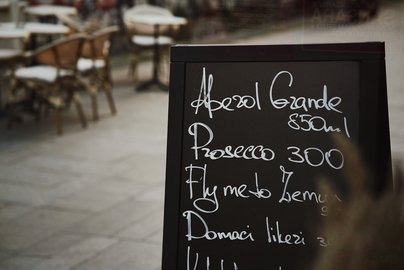
For cocktails — “Ta Stvar” (“That Thing”): homemade cranberry liqueur, raspberry purée, citrus liqueur, and prosecco — nearly a liter of cocktail for 850 RSD. It’s our signature drink, loved by around 70% of our guests. Serbians are especially surprised: they are used to getting a tiny Aperol Spritz and a few snacks for that money in summer bars, while here they receive a truly generous serving.
Gleb:
As for the atmosphere, we have 16 tables, and one of our key features is that we don’t have a traditional contact bar counter. Every table becomes its own little bar. We sit with guests if they want, talk about wines, regions, grape varieties, explain cocktails, and that personal communication forms half of the entire experience.
Writer. Blogger. Traveler. Researcher. Electronic Music Lover.